Colocation Service Providers: What Should You Compare Beyond Rack Space?
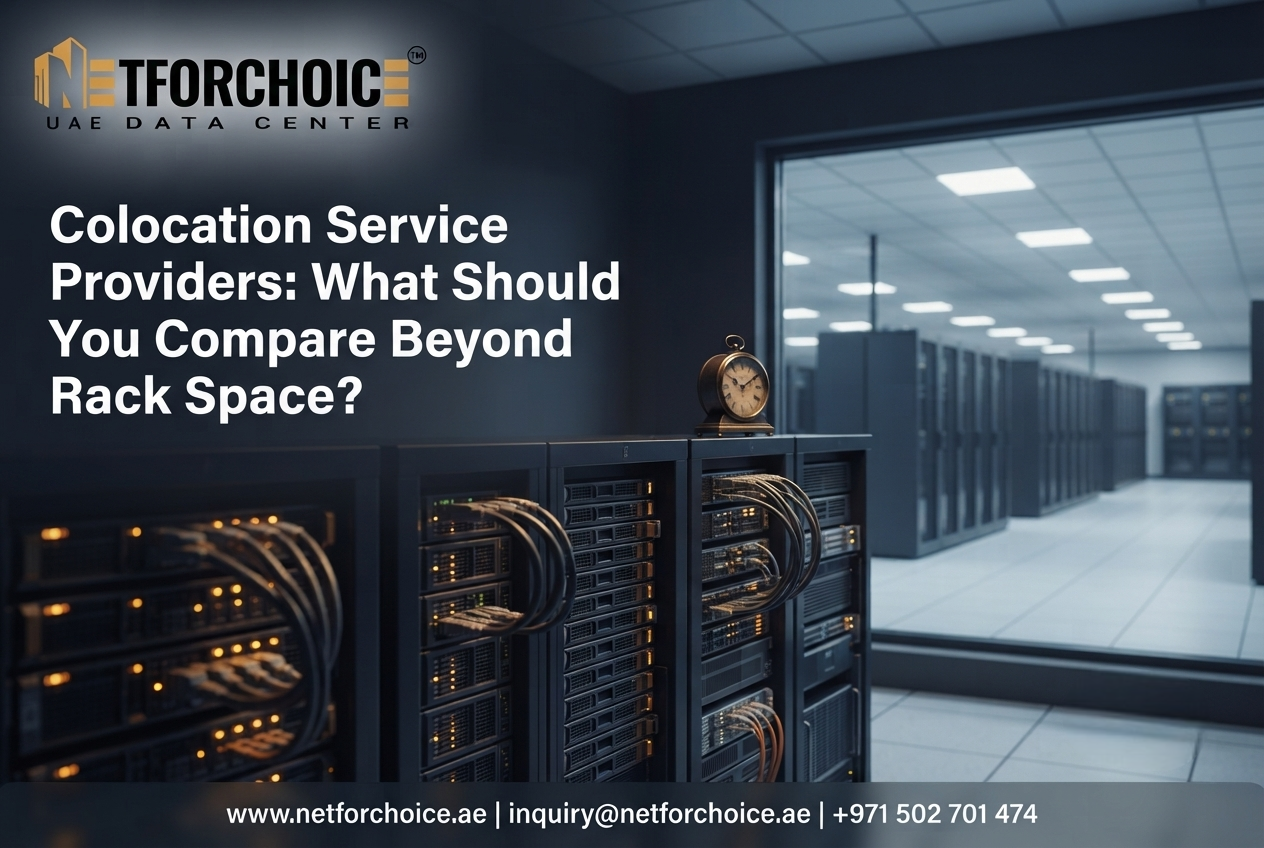
A rack quote fits on one line. That is why most people compare it first and why many get surprised later. Among colocation service providers the price per rack says almost nothing about month eight, when your servers need more power or something breaks at night. Here is what I would check before picking a colocation data center.
How Much Power Can You Actually Pull?
Uptime Institute's 2026 survey put the average rack above 11 kW for the first time. Some operators now run racks at 30 kW or more. Your hardware may sit far below that or far above it. What matters is the cap written in your contract. One rack of GPU servers can pass 6 kW without trying.
When colocation service providers quote power, press for specifics. Ask for the hard limit per rack. Ask whether you pay for what you use or for a fixed block. Then ask what happens if you need double next year. Some sites have room ready. Others hand you a waitlist.
Redundancy belongs here too. N+1 gives you one spare unit. 2N gives you a full second power path. The right pick depends on what an hour offline costs you.
Does the Uptime Promise Hold Up?
Almost every host on your shortlist will print a big uptime number. Tier III designs aim for about 99.982%. Tier IV aims for 99.995%. Do the math and the gap turns real: roughly 95 minutes of downtime a year against 26.
The number alone means little. What counts as an outage? Is planned maintenance left out? How do credits work? Credits usually return a slice of one month's fee. They do not refund the sales you lost.
Uptime Institute's outage research lists network and power faults as the top technical causes. So ask to see incident reports from the last two years. A host that hands them over fast earns points. One that stalls deserves a closer look.
Network: Count the Carriers
A carrier-neutral colocation data center lets you choose between several network companies instead of one. Good colocation service providers name their carriers upfront. Count them. Check access to internet exchanges.
Then look at cross-connects, the cables that tie your gear to a carrier. Each one carries a monthly fee and the total grows fast. Ask how many days an install takes. A week of waiting can push a launch back.
Who Answers at 2 a.m.?
Support is where colocation service providers differ the most. Remote hands means the host's staff work on your equipment when you cannot be there. Get four things in writing: support hours and response time for urgent tickets plus the billing method and hardware replacement terms.
Run a small test during the trial. Send a minor ticket and time the reply. It costs nothing and tells you more than any brochure.
The Fine Print and the Map
Some colocation service providers pair a low rack rate with heavy extras. Check the term length and yearly price increases. Look at minimum power commitments and exit fees. Moving out costs real money since you pay for labor and downtime during the move.
Location deserves a second look. Third-party sites now host more IT workloads than company-owned ones by facility count. So popular markets fill up. Pick a site close enough to your users for low delay. If you want production and backup in different cities under one contract then look at providers such as Flexential that sell high-power space across several markets.
Some warning signs are easy to remember. Vague power answers. No incident history. One carrier only. Support during business hours. A long lock-in with big exit fees. Any one of these should slow you down when comparing colocation service providers.
Before You Sign
Price gets you through the first meeting. Power limits and support quality decide whether the setup still works a year later. Push for written answers on every point above. If you can, tour the building. Ten minutes on the floor beats a long proposal.
FAQs
What do colocation service providers include in the base price?
Usually space with basic power and cooling plus physical security. Network access and remote hands often cost extra.
How much power per rack should I plan for?
Add up the draw of your hardware and leave room to grow. Averages now sit above 11 kW but your needs may be far lower or higher.
Is a Tier IV colocation data center always better?
No. It costs more. If your workload can handle a short outage or runs across two sites then Tier III may be enough.