Colocation Data Center vs Cloud Hosting: Which Model Fits Your Workload?
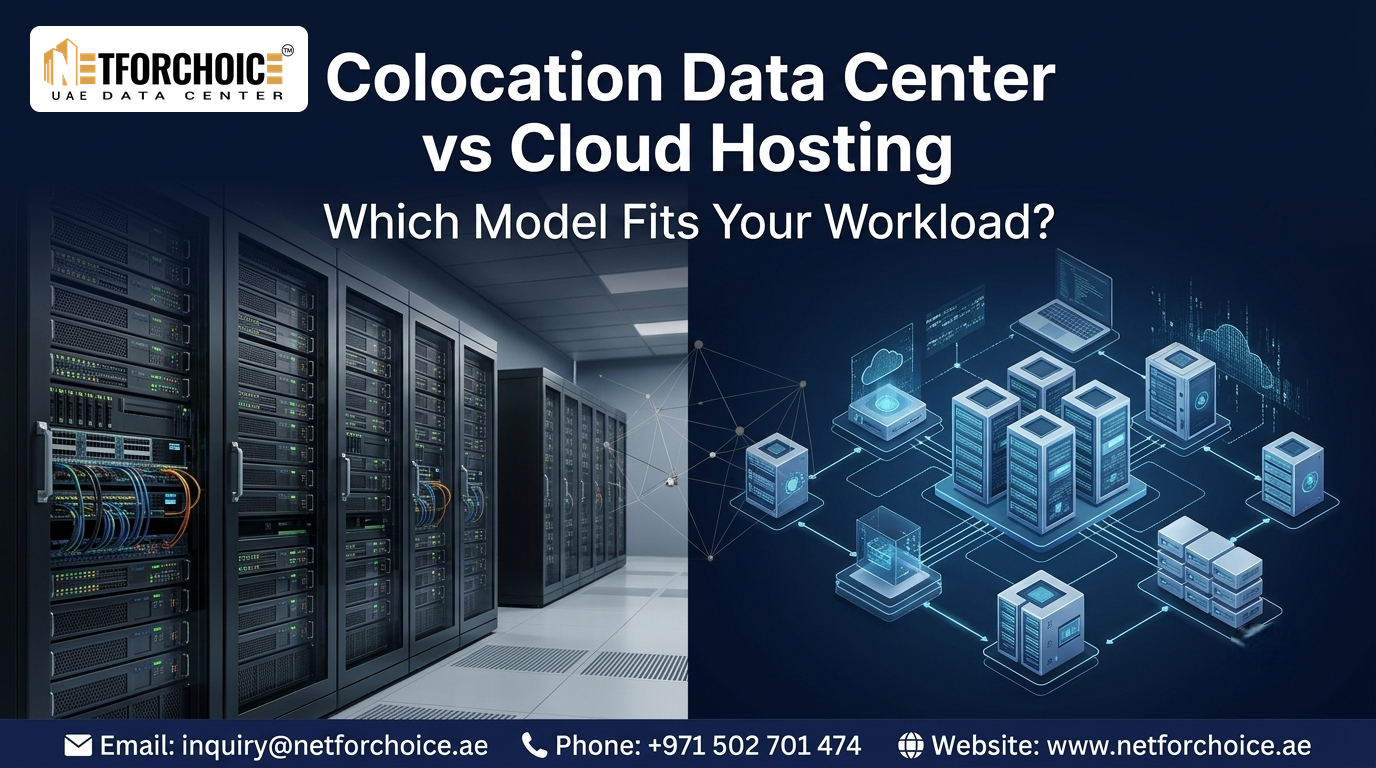
Choosing between a colocation data center and cloud hosting is an important infrastructure decision for businesses that depend on reliable applications, databases and online services. Both models provide access to computing resources, but they differ in hardware ownership, cost structure, scalability and the level of control a business retains.
The right choice depends on how your applications operate, how much control your IT team needs and what your business expects to spend over time. Some workloads benefit from dedicated physical hardware, while others need resources that can scale quickly as demand changes. Understanding these differences helps businesses choose an infrastructure model that supports their current operations without creating unnecessary costs or management challenges.
What Is a Colocation Data Center?
A colocation data center is a facility where businesses place their own servers and networking equipment in a professionally managed environment. Instead of building and maintaining a dedicated server room, a business rents space and receives agreed services such as power, cooling, physical security and network connectivity.
The business generally retains ownership of its hardware and responsibility for its operating systems, applications and equipment maintenance. Depending on the service agreement, the facility provider may also offer remote hands, monitoring or additional managed services.
What businesses gain from colocation
Colocation can be useful when a company needs control over its physical infrastructure but does not want to operate its own data center facility.
Businesses can select hardware configurations that match their workloads, maintain control over server settings and plan capacity around known requirements. They can also benefit from facility infrastructure designed to support continuous operation, including backup power systems, cooling and controlled physical access.
However, colocation does not remove every infrastructure responsibility. Businesses must account for hardware replacement, software updates, monitoring, backup planning and technical staffing unless these responsibilities are included in their service agreement.
How Cloud Hosting Works
Cloud hosting provides computing, storage and networking resources through a cloud service provider. Rather than purchasing and installing physical servers, businesses rent resources according to their technical requirements and selected pricing model.
Many cloud platforms allow users to provision resources quickly, increase capacity when demand rises and reduce capacity when it falls. They may also provide managed databases, backup services, security tools and other capabilities that would otherwise require separate implementation.
Why businesses choose cloud hosting
Cloud hosting is particularly useful for applications with changing workloads, businesses launching new services and teams that need to deploy infrastructure without waiting for physical hardware procurement.
It can also reduce the need to manage physical servers and facility infrastructure. However, cloud customers still have responsibilities for areas such as application security, access permissions, data protection and configuration. Costs can also increase when workloads consume more computing, storage or data-transfer resources than expected.
Colocation Data Center vs Cloud Hosting: Key Differences
The most important difference is that colocation typically gives a business ownership of its physical equipment, while cloud hosting provides access to provider-operated infrastructure. This difference affects how businesses budget, scale and manage their systems.
1. Hardware ownership and control
With colocation, businesses choose and own their servers. This can be valuable when applications depend on specific processors, storage configurations, networking equipment or specialized hardware.
Cloud hosting removes the need to purchase the underlying physical servers. Businesses select from the provider's available resource types and service configurations instead.
Colocation may suit organizations that need extensive control over their hardware environment. Cloud hosting may be more practical for businesses that prefer to focus on applications rather than physical equipment.
2. Upfront investment and ongoing costs
Colocation usually requires an initial investment in servers, networking equipment and other hardware. Ongoing expenses may include rack space, power consumption, connectivity, maintenance, replacement parts and IT staff.
Cloud hosting typically requires less upfront hardware investment. Depending on the service and billing arrangement, businesses pay for resources through usage-based charges, subscriptions or committed-use plans.
Neither model is automatically cheaper. A company with stable, high resource usage and suitable hardware may find colocation financially attractive over a longer period. A business with unpredictable demand may benefit from cloud hosting because it can avoid purchasing physical capacity that remains unused.
A useful comparison should include the full cost over the expected deployment period, not just the monthly rack fee or the advertised price of a cloud server.
3. Scalability and capacity planning
Cloud hosting allows businesses to add or remove supported resources without purchasing and installing physical servers. This makes it useful when application demand changes frequently or when a business needs to launch new environments quickly.
Colocation expansion generally requires planning for available rack space, electrical capacity, cooling, network connections and hardware procurement. Adding equipment may take longer, but businesses can plan physical capacity around stable and predictable workloads.
The decision depends on how quickly capacity must change. A business with steady demand may value planned hardware expansion, while a business experiencing unpredictable traffic may need the flexibility offered by cloud resources.
4. Performance, connectivity and latency
Performance depends on more than the hosting model. Processing capacity, storage performance, application design, network routing and the location of users can all influence response times.
Colocation gives businesses greater control over server specifications and can provide access to selected network providers and dedicated connections. This may be useful for applications that require specific hardware or predictable connectivity arrangements.
Cloud hosting provides configurable resources and networking options, but actual performance depends on the selected services, deployment design and provider infrastructure.
Businesses should assess application benchmarks, network requirements and data-transfer patterns before deciding. Neither colocation nor cloud hosting guarantees better performance in every situation.
5. Security and maintenance responsibilities
A colocation provider typically manages the physical facility, including controlled access and the infrastructure services specified in the contract. The customer generally remains responsible for its servers, operating systems, applications and data.
Cloud providers manage the underlying physical infrastructure, while customer responsibilities depend on the services being used. A managed cloud service may handle more operational tasks than a basic virtual server.
Both approaches require a clear security plan. Businesses should evaluate identity and access management, patching, monitoring, backups, disaster recovery and applicable compliance requirements. They should also confirm which responsibilities belong to the provider and which remain with their internal team.
Which Model Fits Different Workloads?
Comparing infrastructure options becomes easier when the decision starts with the workload rather than the technology itself.
When colocation may be the better fit
A colocation data center may be suitable for businesses that:
Run stable workloads with predictable resource requirements.
Already own servers that remain useful and cost-effective.
Need specific hardware configurations or direct control over equipment.
Require particular network connections or physical infrastructure arrangements.
Have the technical staff or managed services needed to maintain their systems.
For example, a business running an established database on carefully configured physical servers may prefer to retain its hardware while moving it into a professionally managed facility. This approach can provide facility-level infrastructure without requiring the business to build its own data center.
When cloud hosting may be the better fit
Cloud hosting may suit businesses that:
Experience changing traffic or seasonal demand.
Need to deploy development and testing environments quickly.
Want to avoid purchasing physical servers before workloads are established.
Need access to managed databases, analytics or other cloud services.
Have limited capacity to maintain physical infrastructure.
For example, a growing software business may experience changing application demand as its customer base expands. Cloud resources can make it easier to adjust supported capacity without waiting for new physical servers to be installed.
When a hybrid approach makes sense
Some businesses benefit from combining colocation and cloud hosting rather than moving every workload to one environment.
A company might keep a stable database or specialized application on physical hardware in a colocation facility while using cloud resources for development, temporary workloads, analytics or additional capacity during demand spikes.
This approach can offer flexibility, but it also introduces integration requirements. Businesses must plan network connectivity, identity management, monitoring, data movement, backup procedures and responsibilities across both environments.
A hybrid design is most effective when each workload has a clear reason for running in its chosen environment.
Questions to Ask Before Choosing
Before committing to either model, businesses should evaluate several practical factors.
How predictable is the workload? Stable demand may support long-term capacity planning, while frequent changes may favor flexible cloud resources.
Do we already own suitable hardware? Existing equipment may influence the economics of colocation, particularly if replacement is not immediately necessary.
What is the full cost over time? Include equipment, facility fees, power, bandwidth, cloud consumption, data transfer, staffing, maintenance and migration expenses.
What technical skills are available internally? Colocation may require more direct hardware management. Cloud can reduce physical infrastructure work but still requires operational expertise.
What are the recovery requirements? Assess backup frequency, recovery time objectives, recovery point objectives and how systems will operate during a facility or network outage.
How will the business grow? Consider expected workload changes, hardware replacement cycles and the time needed to increase capacity.
Answering these questions helps establish requirements before comparing individual providers or signing a contract.
Choosing the Right Infrastructure for Your Business
A colocation data center and cloud hosting solve related but different infrastructure problems. Colocation gives businesses a place to operate their own hardware with facility services, while cloud hosting provides access to configurable computing resources without requiring ownership of the underlying physical servers.
Colocation may be a strong option for predictable workloads, specialized equipment and businesses that need direct hardware control. Cloud hosting may be better suited to variable demand, rapid deployment and applications that benefit from managed services. A hybrid approach can work when different workloads have different requirements.
The best decision comes from comparing technical needs, operational responsibilities, resilience requirements and total cost over time. Businesses evaluating colocation should also review power capacity, cooling, connectivity, physical security, support arrangements and contract terms before choosing a provider.
Frequently Asked Questions
Is colocation cheaper than cloud hosting?
It depends on workload size, utilization, hardware costs, staffing and contract terms. Colocation may be cost-effective for stable workloads over a longer period, but it requires investment in equipment and ongoing maintenance. Cloud hosting may reduce upfront costs but can become expensive when resource usage and data-transfer charges are high.
Can a business use colocation and cloud hosting together?
Yes. Businesses can keep selected applications or physical servers in a colocation facility while using cloud hosting for variable workloads, development, backup or additional capacity. The design requires careful planning for connectivity, security, data movement and operational management.
Is colocation better for workloads that require dedicated hardware?
It can be a good fit when a business needs to own and control specific physical equipment or configurations. However, some cloud services also offer dedicated hardware options. The decision should be based on the required configuration, performance, availability, management responsibilities and total cost rather than hardware ownership alone.
Comments
Join the discussionNo comments yet. Be the first to comment.